 Shutter LeagueShutter League
Higher than 23% of images in the League
1.68 to go to recognition level (8.5) · best this year 9.14
chitecture frames the devotee, then wait for the moment of completion: the offering placed, the bell struck, the prayer gesture finished. The approach is preparation. The completion is the story. Your phone's wide camera is perfect for this — it captures the full context without needing distance.
The camera is just the tool. The real instrument is your attention — and your attention is sharpening with every frame you make.
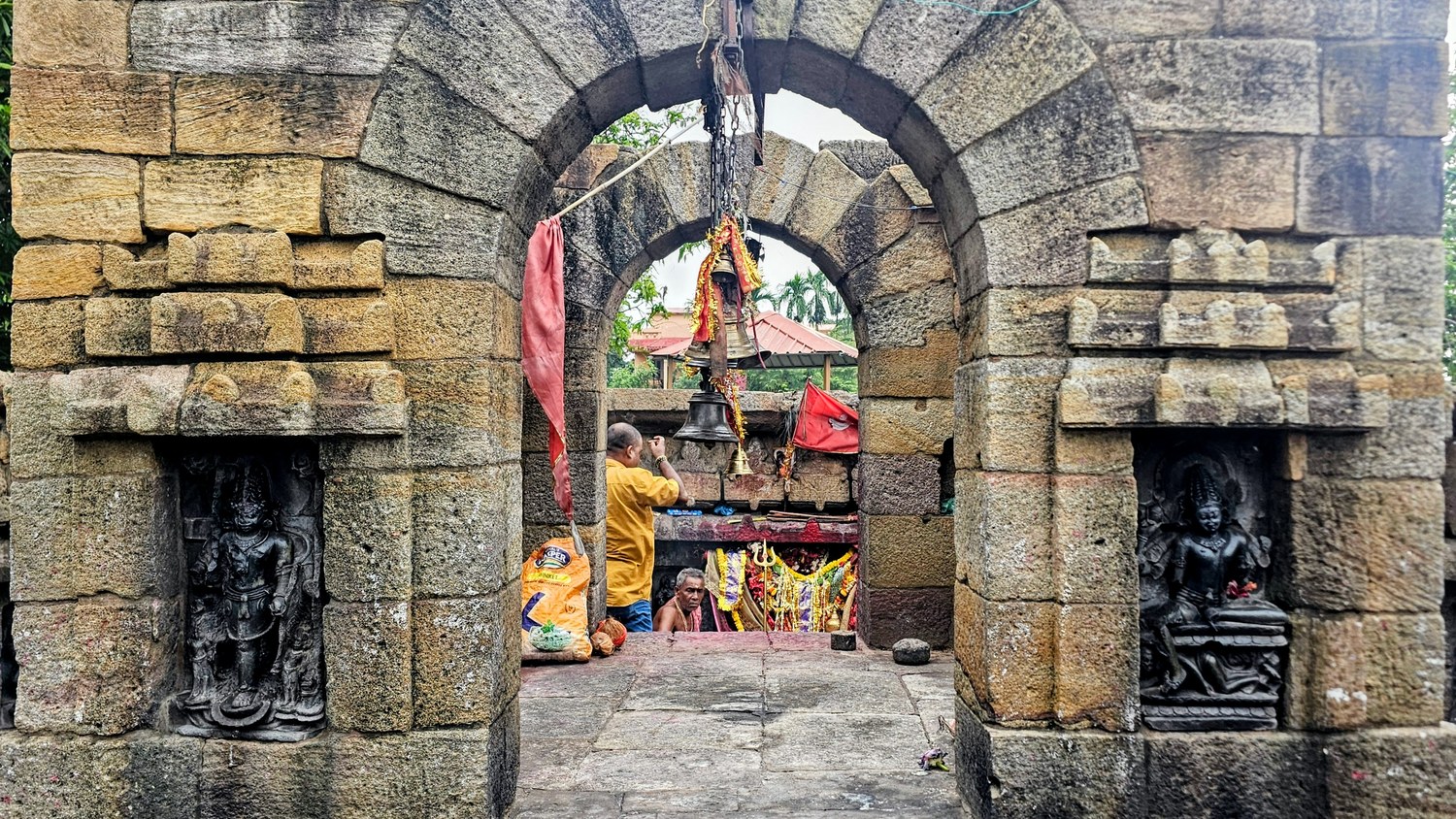
Instinctively composed — you positioned yourself outside the shrine and used the stone archway as a natural frame, which is the decision that separates documentary photographers who understand sacred space from those who just point and shoot. You did not enter the ritual — you framed it through the architecture that holds it.
What is working
Where it stops short
The same five, every time, on the same scale every evaluation uses.
2.6 separates your strongest dimension from your weakest. That gap is where the next evaluation is won.
Where this reading sits against every photograph the engine has read.
This places you in the top 35% of Documentary images evaluated on Shutter League. Your how difficult it was score of 5.2 is below the Documentary average of 6.8 — the access to the temple and the cultural sensitivity required are genuine achievements, but the technical execution from a static position outside the archway does not demand the mechanical precision or environmental difficulty that would push this higher. Work on positioning yourself for the decisive peak of the ritual act, not just the approach to it.
“Beautifully layered — you found the frame that shows the ritual inside its architecture, not just the ritual alone.”
Composition · Frame within a frame
Why this score. Photographing inside an active temple shrine with devotees present requires cultural sensitivity and access trust, but the technical execution — wide-angle framing from a static position outside the archway — is straightforward and does not demand mechanical precision or environmental difficulty.
Why this score. The frame-within-frame composition through the stone archway is a familiar documentary treatment, but the layered geometry — carved deities flanking the arch, the bell chain as a vertical anchor, the shrine receding through multiple planes — creates visual complexity that lifts this above a standard temple record shot.
Why this score. The standing devotee reaching toward the bell creates a moment of ritual action, but the gesture is mid-motion rather than at its peak — the decisive frame would have been the instant the hand made contact with the bell or the moment the bell was struck and the devotee's posture showed the full extension of the ritual act.
Why this score. Cultural Wonder scores high here — the image documents daily devotional practice at a 64 Yogini temple, a tradition most viewers will never witness, and the layered architectural framing places the viewer inside the sacred geometry of the site rather than observing it from outside.
Why this score. The image creates a specific feeling of quiet reverence — the stone archway frames the ritual as something ancient and ongoing, the devotees absorbed in their practice, and the viewer feels like a respectful witness rather than an intruder, which is a precise emotional register that documentary work at its best achieves.
Standard edit · balanced
Darken the bright sky patch visible through the upper arch — it is the brightest element in the frame and pulls the eye away from the devotees. Bring it down to match the stone tonality and the shrine becomes the clear focus.
Crop tighter from the left and right edges to remove the outer stone blocks and fill the frame edge-to-edge with the archway — this tightens the composition and makes the carved deities more prominent as framing elements.
Lift the shadows slightly on the seated devotee's face and torso — he is currently underexposed relative to the standing figure, and bringing him up one step makes both human subjects equally readable.
Creative edit · artistic
Convert to black and white and push the contrast hard — the stone texture, the metal bell chain, the carved deities, and the human gestures all become graphic elements in a single tonal language, and the image shifts from documentary record to timeless ritual geometry. The colour is beautiful, but the B&W version would feel like it was made in 1950 or 2025 — the ritual unchanged.
Now open
Jagannath Temple and Grand Road in Puri — you are already there, zero travel needed. Rath Yatra runs 16 July this year, and the three massive wooden chariots pulled by hundreds of thousands of devotees create the most intense street and documentary opportunity in Odisha. Arrive at 4am for pre-dawn chariot decoration under lamp light — no crowds, extraordinary ritual preparation. The frame no one else makes: the rope going taut, 200 men leaning simultaneously into the pull, shot low from rope level on the south side of Bada Danda, 400 metres from the temple gate. Based on your location (Puri) · Genre (Documentary) · Your growth opportunity (the decisive peak of the ritual act).
Coming up
Bahuda Yatra — the return procession of the chariots — happens 24 July, eight days after the outbound journey. Same energy, different light, and fewer photographers because most assume the story ended on day one. The return is when the devotees are exhausted and the emotion is rawer.
You have been shooting within your comfort zone recently. The Depth of Difficulty readings suggest familiar subjects in familiar light. The next level of your work probably requires deliberately harder conditions.
Across your last 30 photographs, over the past 43 days.
This evaluation is currently based on 3092 calibrated images.