 Shutter LeagueShutter League
Higher than 27% of images in the League
1.38 to go to recognition level (8.5) · best this year 9.14
r the human reality that exists in the margins: the flower sellers resting between sales, the priests eating lunch in the shade, the children playing near the tank. The frame worth making is the one where the sacred architecture is present but the human story is primary.
The photograph you almost made is always better than the one you settled for.
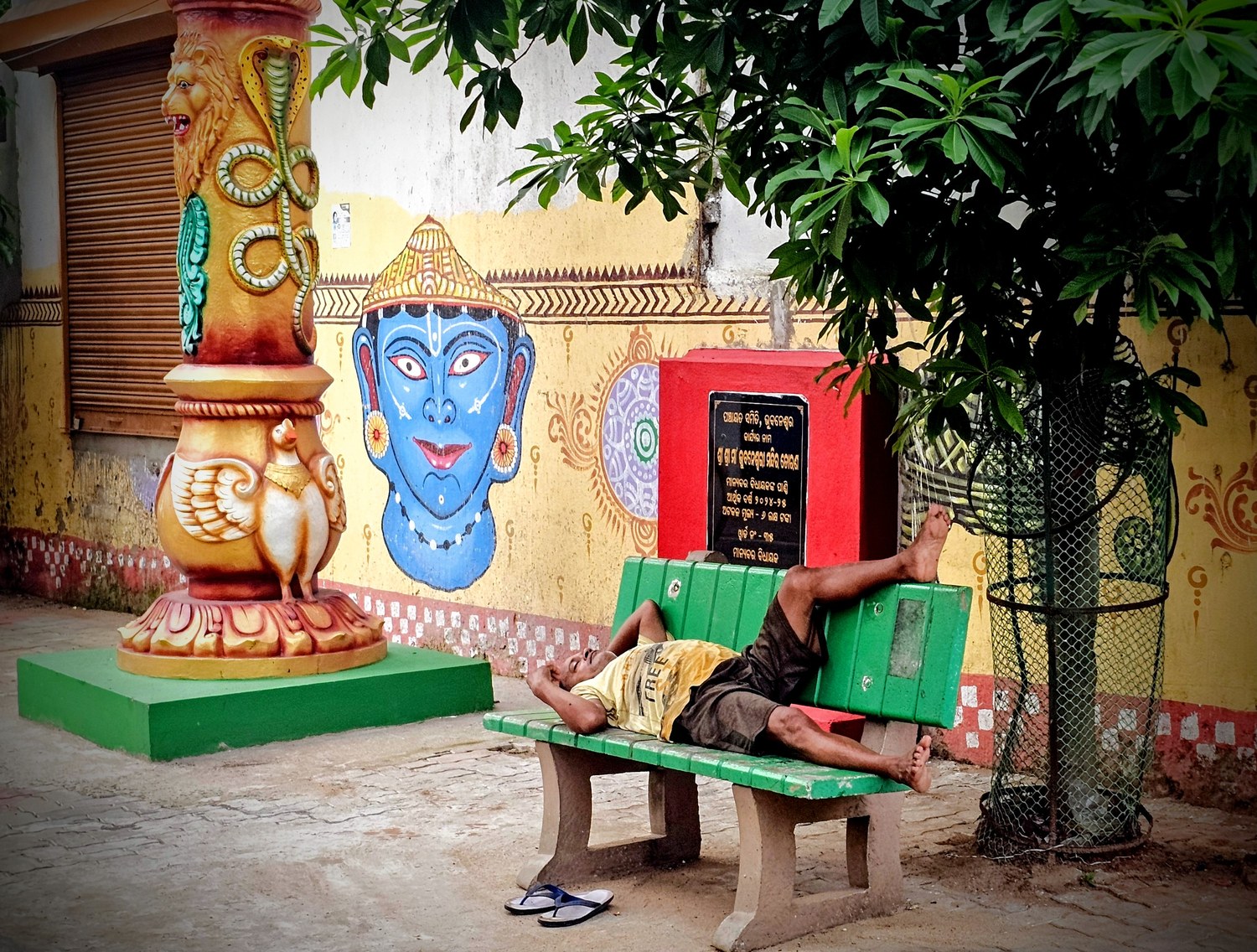
You made the decision to include the full context — the mural, the pillar, the bench, the flip-flops — rather than isolating the sleeping figure, and that decision is what makes this documentary rather than portraiture.
What is working
Where it stops short
The same five, every time, on the same scale every evaluation uses.
2.9 separates your strongest dimension from your weakest. That gap is where the next evaluation is won.
Where this reading sits against every photograph the engine has read.
This places you in the top 22% of Documentary images evaluated on Shutter League. Your how striking the image is to a stranger score of 6.8 is above the Documentary average of 5.2 — the juxtaposition of sacred iconography and human exhaustion creates visual tension that most temple photography avoids, and that willingness to show the dual reality is what separates documentary work from devotional record.
“You found the frame that most temple photographers walk past — the one where the sacred and the exhausted share the same courtyard, and neither cancels the other out.”
Composition · Frame within a frame
Why this score. Being present in a public temple courtyard in Bhubaneswar requires no special access or physical risk — the difficulty here is compositional, not situational, and the technical execution on a phone in midday light is competent but not challenging.
Why this score. The juxtaposition of exhausted human rest against vibrant religious iconography is a strong visual contrast — the frame breaks the expectation of temple photography as devotional record and instead shows the human reality of public space.
Why this score. The sleeping figure at full horizontal rest, the flip-flops placed just so, and the deity mural framing the composition from behind — this is the peak of the scene's geometric and narrative alignment, and you held the frame until all elements settled.
Why this score. Cultural Wonder — the image shows the dual reality of Indian public religious space: the sacred iconography and the exhausted labourer who rests in its shadow, a truth most temple photography erases by framing only the devotional.
Why this score. Resignation — the specific feeling is not sadness or despair but the quiet acceptance of exhaustion in a public place, the body language of someone who has stopped fighting the day and simply lies down wherever there is a bench.
Standard edit · balanced
Darken the upper right corner where the tree foliage meets the white wall — it is pulling the eye away from the central composition, and removing that brightness competition lets the mural and the figure hold the frame more cleanly.
Increase contrast slightly on the green bench — it is the structural anchor of the composition, and giving it more tonal separation from the pale ground makes the horizontal line more definite.
Crop tighter from the left edge to remove the partial view of the decorative pillar — it is visually interesting but compositionally it splits attention, and the frame becomes stronger when the mural, the figure, and the bench are the only three elements.
Creative edit · artistic
Convert to black and white and push the contrast hard — the mural becomes a graphic pattern, the figure becomes a silhouette, and the emotional register shifts from cultural observation to something closer to existential solitude, the body at rest under the gaze of forces it cannot control.
Now open
Jagannath Temple and Bada Danda (Grand Avenue) in Puri is 60km from you — the annual Rathyatra festival takes place on July 15, 2026, where massive wooden chariots carrying deities are pulled through the streets by thousands of devotees. Arrive at dawn (5–6 AM) before the main procession begins and position yourself near the chariot assembly area — the frame worth making is the one where exhausted pullers rest against the chariot wheels in the early light, the devotional energy and the human cost in the same composition.
You have been shooting within your comfort zone recently. The Depth of Difficulty readings suggest familiar subjects in familiar light. The next level of your work probably requires deliberately harder conditions.
Across your last 30 photographs, over the past 43 days.
This evaluation is currently based on 3092 calibrated images.