 Shutter LeagueShutter League
Higher than 1% of images in the League
3.6 to go to recognition level (8.5) · best this year 6.80
o a single person crosses in front of the colour, silhouetted, and take that frame.
The photograph you almost made is always better than the one you settled for.
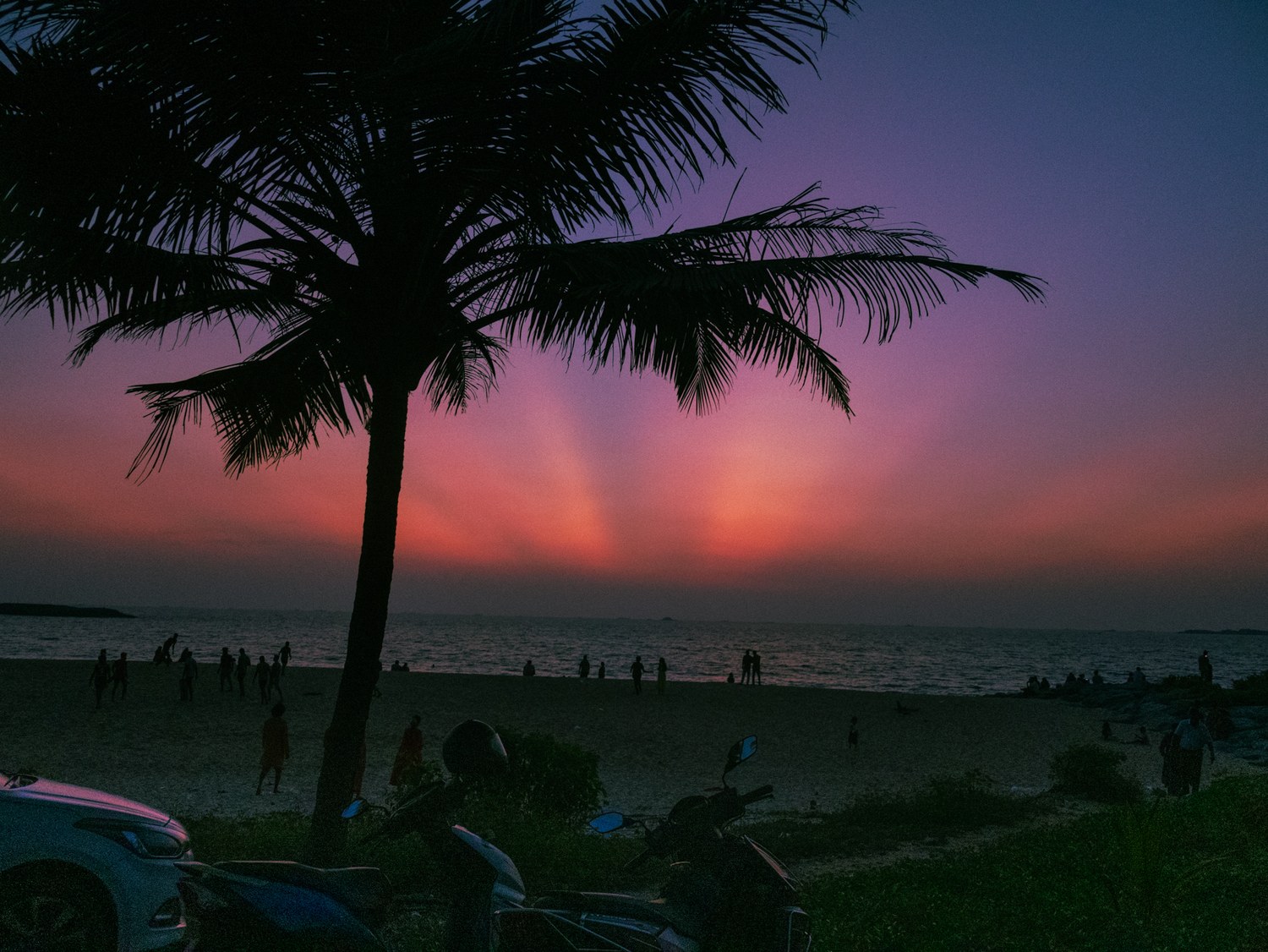
Beautifully read — you exposed for the sky and let the foreground fall to silhouette, which is the decision most photographers at this beach would not have made.
What is working
Where it stops short
The same five, every time, on the same scale every evaluation uses.
3.0 separates your strongest dimension from your weakest. That gap is where the next evaluation is won.
Where this reading sits against every photograph the engine has read.
This places you in the top 52% of Nature images evaluated on Shutter League. Your how striking the image is to a stranger score of 4.1 is below the Nature average of 5.8 — the silhouetted palm against a sunset sky is one of the most photographed compositions in tropical beach photography, so to score higher on visual surprise, you would need to find an angle, a framing, or a human moment that changes what the scene means.
“Lovely instinct — you stopped for this colour and held the exposure for the sky.”
Composition · Rule of thirds
Why this score. Arriving at a public beach at sunset and exposing for the sky gradient requires no physical difficulty, no restricted access, and no technical precision beyond standard exposure — the palm tree silhouette is a compositional find, not a capture challenge.
Why this score. The silhouetted palm against a vivid sunset sky is one of the most photographed compositions in tropical beach photography — the treatment is familiar, the angle conventional, and the framing follows the expected visual language of the genre.
Why this score. The sunset gradient is at a strong colour peak, but the human figures along the shoreline are scattered without a specific interaction or geometric resolution — the decisive frame would have been a single silhouetted figure or pair at the water's edge, isolated against the colour, and that moment was available but not taken.
Why this score. The sunset colour gradient and the vertical light columns near the horizon create atmospheric wonder — the viewer sees something visually striking — but the scene itself is accessible to anyone at Malpe Beach at dusk, so the wonder is in the natural phenomenon, not the photographer's access or decision.
Why this score. The image creates a feeling of peace and the end of the day — the colour is beautiful, the silhouettes suggest human presence without demanding attention — but the emotion is ambient and gentle rather than specific and undeniable, so the affective register is pleasant but not powerful.
Standard edit · balanced
Darken the lower foreground (grass, motorcycles, parked car) by one full stop — they are pulling attention away from the sky and the palm tree, and removing that competition makes the colour and the silhouette the clear focus.
Crop tighter from the bottom to remove the motorcycles and car entirely — the frame becomes about the sky, the palm, and the human presence along the water, and nothing else.
Increase vibrance by +10 to +15 on the orange-red gradient near the horizon — the colour is already strong, but pushing it slightly makes the light columns more vivid and gives the frame more emotional charge.
Creative edit · artistic
Convert to black and white and push the contrast hard — the silhouettes become pure shape, the gradient becomes tonal drama, and the frame shifts from a sunset record to a study in form and light — it becomes about geometry, not colour.
Now open
Hesaraghatta Lake is 45 minutes from you. Right now in January, the water level is low and the exposed mudflats attract painted storks, spot-billed pelicans, and grey herons at dawn — arrive at 06:15, position yourself so a single wading bird is silhouetted against the first light on the water, and take that frame. The light will be similar to what you had at Malpe, but the subject will give the silhouette a story.
This evaluation is currently based on 3092 calibrated images.