 Shutter LeagueShutter League
Higher than 22% of images in the League
1.7 to go to recognition level (8.5) · best this year 6.80
t directly. The texture of skin, the shape of the nose, the line of the jaw — all of it becomes visible when the light comes from the side at a shallow angle. That is the difference between a lit face and a sculpted face.
The camera is just the tool. The real instrument is your attention.
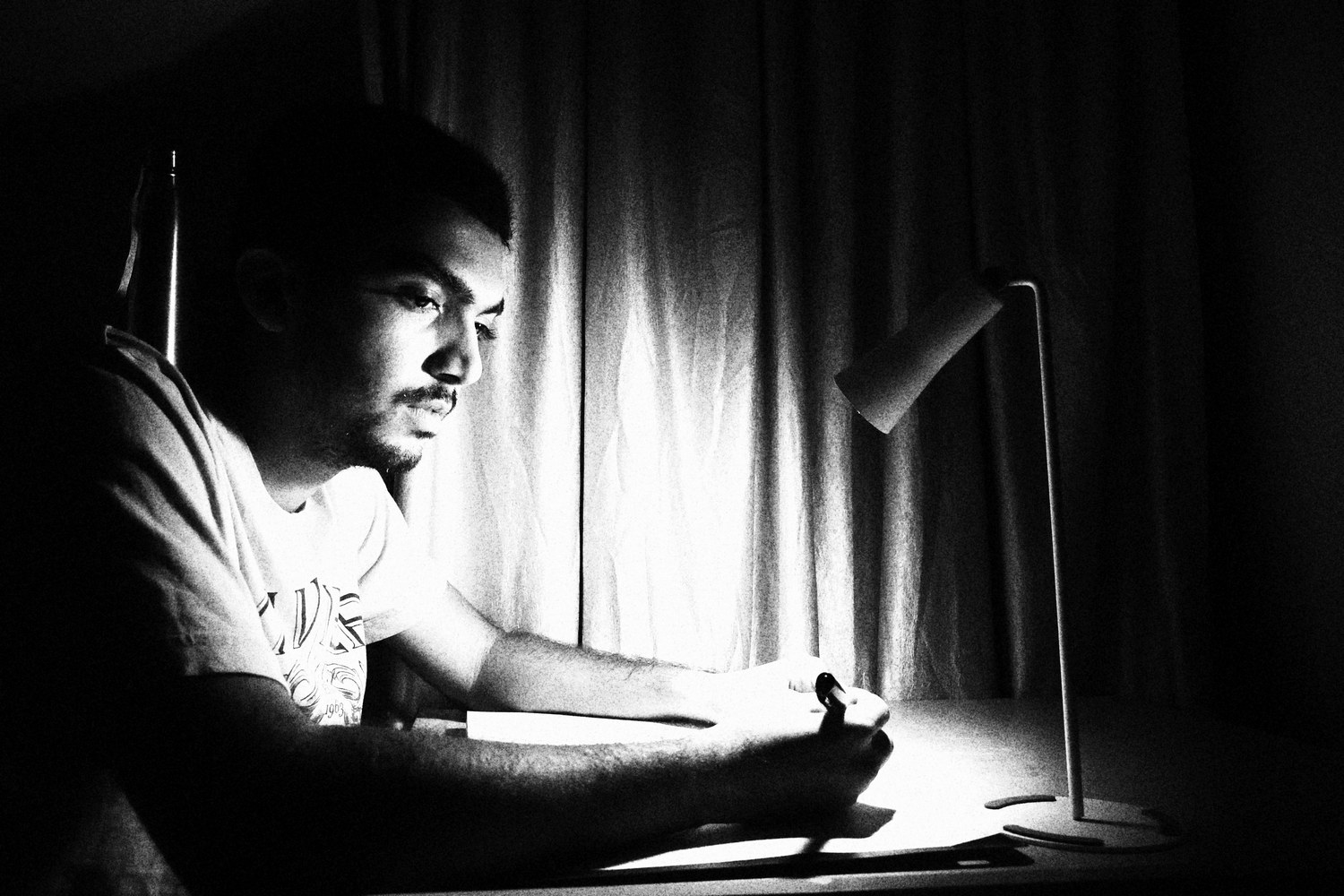
Instinctively controlled — you built this frame with a single desk lamp and a backlit curtain, and the chiaroscuro separation is clean and deliberate. Most photographers working indoors default to even lighting or available light. You chose to sculpt the light, and that decision is what makes the image work.
What is working
Where it stops short
The same five, every time, on the same scale every evaluation uses.
2.3 separates your strongest dimension from your weakest. That gap is where the next evaluation is won.
Where this reading sits against every photograph the engine has read.
This places you in the top 42% of People images evaluated on Shutter League. Your how striking the image is to a stranger score of 5.8 is slightly below the People average of 6.2 — the chiaroscuro lighting is well-executed but the overall treatment follows established low-key portrait conventions rather than breaking them. To push this higher, look for a compositional element or a decisive moment that separates your frame from the thousands of other side-lit portraits made with a desk lamp.
“Beautifully controlled light — you built this frame with a desk lamp and a curtain, and the chiaroscuro separation is clean and deliberate.”
Composition · Rule of thirds
Why this score. Working with a single desk lamp and a backlit curtain to create chiaroscuro lighting in a darkened room requires deliberate control of limited light sources — the execution is competent but the setup is accessible to anyone with a lamp and a curtain.
Why this score. The dramatic side-lit portrait with deep shadows is a classic chiaroscuro treatment — the backlit curtain adds layering but the overall approach follows established low-key portrait conventions rather than breaking them.
Why this score. The moment captures a contemplative expression with the subject gazing forward while holding a pen — the decisive frame would have been the instant the pen touched paper or the eyes shifted to the page, showing the act of creation rather than the pause before it.
Why this score. The image creates a specific mood through controlled lighting but does not reveal access, cultural insight, or a singular compositional find — the wonder is in the atmospheric execution rather than in showing the viewer something they could not otherwise see.
Why this score. Contemplation — the subject is caught in a moment of thought, the light isolating him in the darkness, and that stillness creates a specific feeling of introspection and focus that lingers after looking away.
Standard edit · balanced
Darken the brightest part of the backlit curtain by one stop — the bright patch is very close to clipping and it competes with the face for the eye. Bring it down and the subject becomes the clear focus.
Add a subtle fill to the shadow side of the face — not to eliminate the shadow but to hold detail in it. A curves adjustment that lifts the deep blacks by 5-10% will give you that. The chiaroscuro separation stays, the face becomes more readable.
Crop tighter from the top — the upper third of the frame is empty darkness with no detail. Bring the top edge down to just above the subject's head and the frame becomes more concentrated. The mood stays, the composition tightens.
Creative edit · artistic
Convert to a high-grain black and white with pushed contrast — think Tri-X pushed to 3200, the kind of grain that makes the image feel like it was shot on film in a darkroom in 1975. The contemplative mood becomes grittier, more documentary, less cinematic. The image shifts from a portrait to a moment of solitary work.
Now open
Kathakali Centre, Alappuzha is right there in your city — no travel needed. Kathakali dance performances feature elaborately costumed performers with vibrant face makeup executing highly expressive movements and gestures that convey complex emotions and narratives. The frames that work are not the wide shots of the full costume — they are the close portraits during the performance when the dancer's face is mid-expression, the eyes wide, the hands frozen in a mudra. Theatrical lighting during evening performances. Check the centre schedule — performances are typically evening, and photography may require permission.
This evaluation is currently based on 3092 calibrated images.