 Shutter LeagueShutter League
Higher than 2% of images in the League
3.4 to go to recognition level (8.5) · best this year 5.10
Find a spot where a single person is waiting — at a bus stop, on a wall, under a tree — and position yourself so they are backlit by the sky. Set your shutter to 1/15s or 1/8s, and let the vehicles blur into streaks of colour while the person stays sharp. The contrast between human stillness and vehicle motion is the entire story.
The camera is just the tool. The real instrument is your attention.
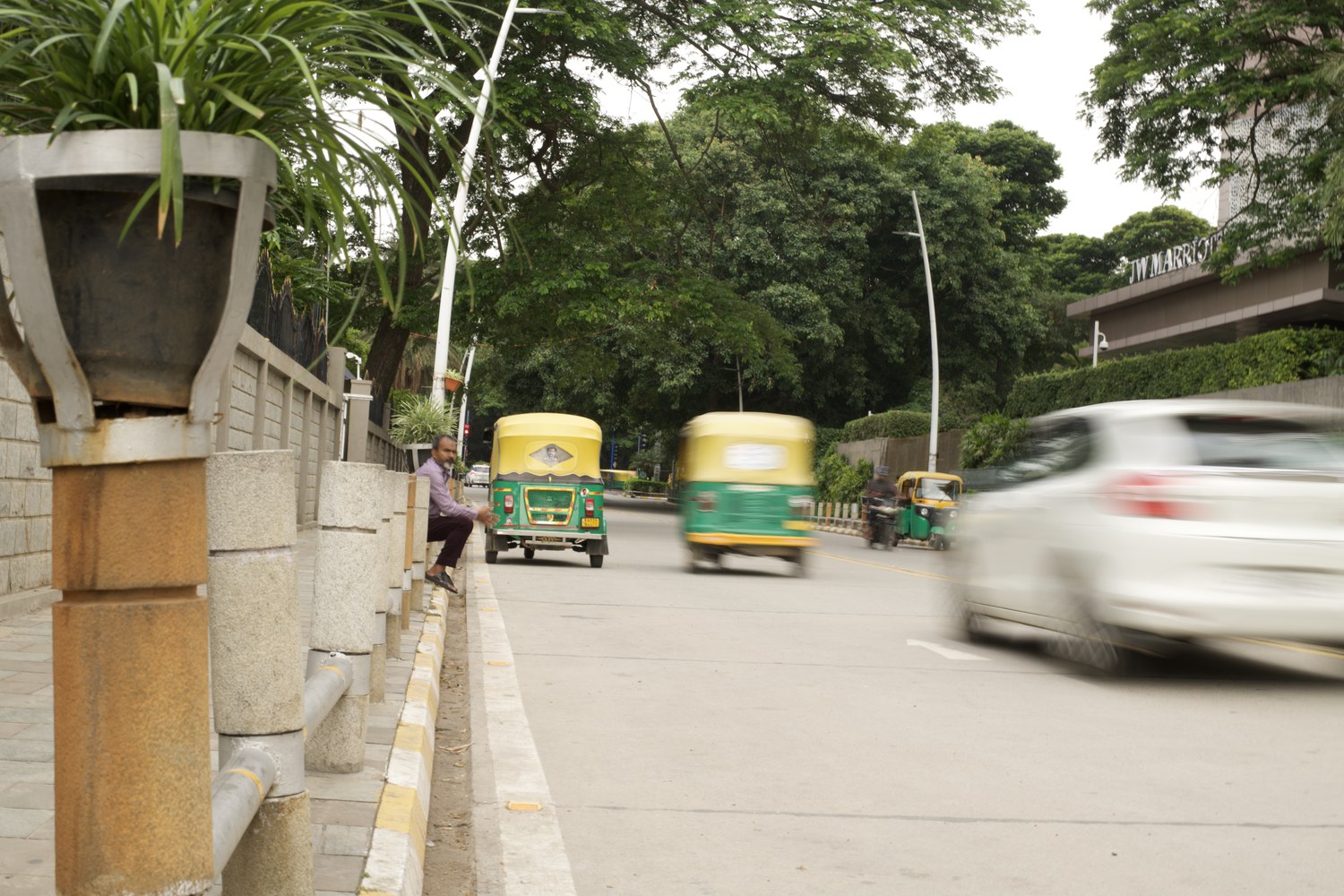
Good instinct — you slowed the shutter to 1/6s and let the white sedan blur into motion while the seated man and the auto-rickshaws stayed relatively sharp. Most photographers at this street would have shot at 1/250s and frozen everything. You made the deliberate choice to show the rhythm of the street.
What is working
Where it stops short
The same five, every time, on the same scale every evaluation uses.
2.0 separates your strongest dimension from your weakest. That gap is where the next evaluation is won.
Where this reading sits against every photograph the engine has read.
This places you in the top 48% of Street images evaluated on Shutter League. Your how striking the image is to a stranger score of 3.8 is below the Street average of 5.2 — the motion blur is intentional and adds energy, but the overall treatment follows familiar visual language without a compositional surprise. Work on finding the one angle or juxtaposition that no one else at the scene would see.
“Good instinct to slow the shutter and let the street move while the man stayed still — that contrast between motion and stillness is the foundation of strong street work.”
Composition · Rule of thirds
Why this score. Shooting from a fixed roadside position with a 50mm lens at f/16 and 1/6s — the slow shutter was a deliberate choice to blur the passing car, but the execution required no physical access difficulty, no environmental hostility, and no timing precision beyond waiting for traffic to pass.
Why this score. The motion blur on the white sedan is intentional and adds energy, but the overall treatment — wide street scene with auto-rickshaws and a seated figure — follows the familiar visual language of Indian urban street photography without a compositional surprise.
Why this score. The moment captures the blur of the passing car and the stillness of the seated man simultaneously, but the decisive frame would have been the instant when the blurred car aligned geometrically with the man's gaze or posture — creating a visual relationship between motion and stillness rather than just coexistence.
Why this score. Eye Wonder is present in the juxtaposition of the still figure against the motion of the street, and the yellow-green auto-rickshaws add cultural specificity, but the frame does not reveal an unseen truth or a compositional find that transforms the ordinary — it documents the scene competently without surprise.
Why this score. The image creates a mild sense of urban rhythm — the contrast between the man's stillness and the street's motion — but no specific emotion lands. The viewer observes the scene without feeling loneliness, isolation, or connection. The emotional register is present but not resolved.
Standard edit · balanced
Crop tighter from the left — bring the man larger in the frame and remove the excess tree canopy and signage on the right. This makes the relationship between the man and the street motion the clear subject instead of one element among many.
Darken the bright patch of sky in the upper right corner — it is competing with the man and the auto-rickshaws for the viewer's attention. Remove that competition and the eye stays on the street.
Increase contrast slightly — the overcast light has flattened the tonal range. A small contrast boost separates the man from the background and gives the auto-rickshaws more visual punch.
Creative edit · artistic
Convert to black and white and push the contrast hard — the yellow-green auto-rickshaws become mid-grey streaks, the man becomes a silhouette, and the motion blur becomes pure graphic energy. The frame transforms from a colour documentary scene into a study of urban rhythm and human stillness. The emotional register shifts from observation to isolation.
Now open
Russell Market in Shivajinagar is 30 minutes from you. Early morning (06:30–08:00) — the flower vendors are setting up, the light is soft and directional through the market roof, and the porters are moving crates and sacks in constant motion. Slow your shutter to 1/15s and let the porters blur into streaks of colour while one vendor stays sharp arranging flowers. The contrast between human stillness and market motion is the frame worth making.
This evaluation is currently based on 3092 calibrated images.