 Shutter LeagueShutter League
Higher than 24% of images in the League
1.66 to go to recognition level (8.5) · best this year 9.21
ne. The frame worth making is the instant both subjects engage simultaneously.
YOUR NEXT BODY OF WORK SEQUENCE: The story is trust between species — how wild animals and humans share space when fear is absent. Frame 1: a young elephant calf reaching its trunk toward a safari vehicle window, the human hand visible but not touching. Frame 2: a habituated leopard walking past a seated safari group at dawn, the tourists frozen in stillness, the leopard indifferent. Frame 3: a lion cub asleep in the shade directly beneath a parked vehicle, the undercarriage visible above, the cub's breathing slow and calm. The story is not about the animals — it is about what happens when wildness and human presence stop being opposites.
The photographer who notices more makes better images. That is the whole secret.
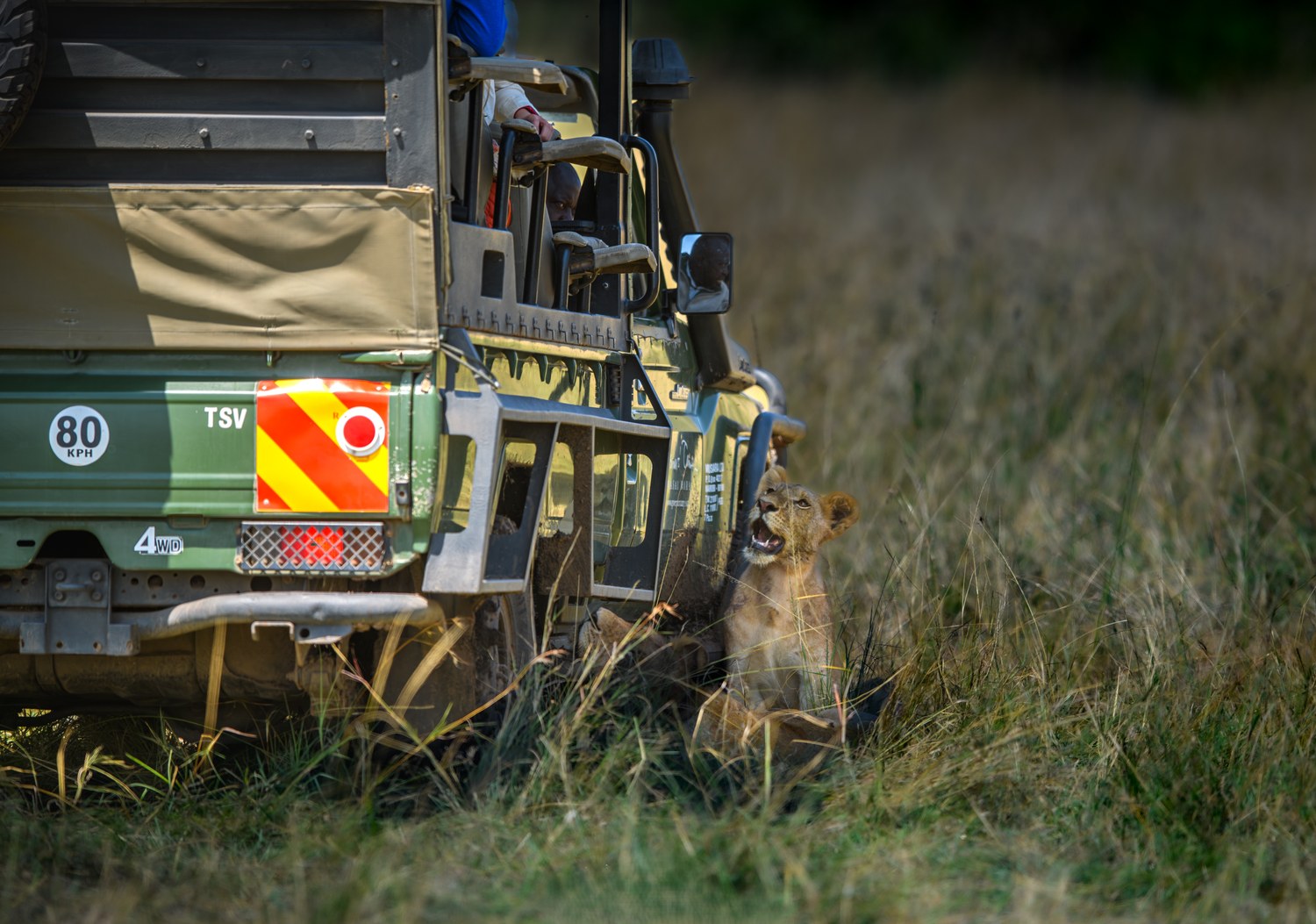
You stayed calm and still enough for the cub to remain relaxed and vocalize beside the vehicle — most photographers at this proximity would have triggered a retreat or maternal intervention. That patience is what earned the access.
What is working
Where it stops short
The same five, every time, on the same scale every evaluation uses.
2.0 separates your strongest dimension from your weakest. That gap is where the next evaluation is won.
Where this reading sits against every photograph the engine has read.
This places you in the top 38% of Wildlife images evaluated on Shutter League. Your how striking the image is to a stranger score of 5.8 is slightly below the Wildlife average of 6.4 — the human-wildlife interaction frame is increasingly common in safari photography, and the next step is finding the angle or moment that breaks the established visual language of the genre.
“Rare access — you were trusted enough by this pride to stay close while the cub vocalized upward, and that proximity is what separates this frame from the thousands of safari vehic”
Composition · Rule of thirds
Why this score. Getting a young lion cub to remain calm and vocalizing beside a safari vehicle at close range requires sustained field access and trust-building with the pride — most photographers never achieve this proximity without the animal fleeing or the mother intervening.
Why this score. The human-wildlife interaction frame is increasingly common in safari photography — the vehicle as compositional element adds context but the overall treatment follows the established safari-tourism visual language.
Why this score. The cub's upward gaze and open mouth capture the vocalization moment clearly, but the person's posture is neutral rather than engaged — the decisive frame was the instant the person leaned forward or made eye contact, creating mutual recognition rather than one-sided observation.
Why this score. Access Wonder — the photographer was trusted enough by the pride to remain this close while the cub vocalized, placing the viewer inside a moment of human-wildlife interaction that most safari visitors never experience at this proximity and calm.
Why this score. Curiosity — the cub's upward gaze and open mouth create a specific feeling of inquiry, as if the animal is asking a question or seeking attention, and that directness makes the viewer feel addressed rather than observing from distance.
Standard edit · balanced
Darken the upper left corner of the vehicle bed — the bright canvas tarp is competing with the cub's face for the viewer's eye. Remove that competition and the cub becomes the clear focal point.
Lift the shadows slightly on the cub's body — the underside is falling into silhouette and losing the texture of the fur. Bringing that detail back adds dimension to the subject.
Crop tighter from the right edge to remove the excess grass — the frame gains energy when the vehicle and cub fill more of the composition without empty space diluting the proximity.
Creative edit · artistic
Convert to black and white and push the contrast hard — the interaction becomes timeless, the vehicle becomes a geometric shape rather than a tourist object, and the cub's upward gaze gains emotional weight when colour is removed. The frame becomes about the gesture, not the safari context.
Now open
Kabini Wildlife Reserve is about 4 hours from Bengaluru. The black leopard has been active this season — sightings are clustering at the waterhole before 7am. One of the rarest melanistic leopard subjects in India, and your timing dimension is your strongest growth edge. This is where your next big score comes from. Based on your location (Bengaluru) · Genre (Wildlife) · Your growth opportunity (how difficult it was)
Depth of Difficulty has been your quietest dimension lately. That often means you are in a productive groove — but grooves become ruts. One session deliberately outside your usual parameters would change this.
Across your last 30 photographs, over the past 67 days.
This evaluation is currently based on 3092 calibrated images.