 Shutter LeagueShutter League
Higher than 25% of images in the League
1.58 to go to recognition level (8.5) · best this year 6.92
lement while the rest stays in shadow. Shoot with your widest lens to hold the full context, but let the light create the hierarchy.
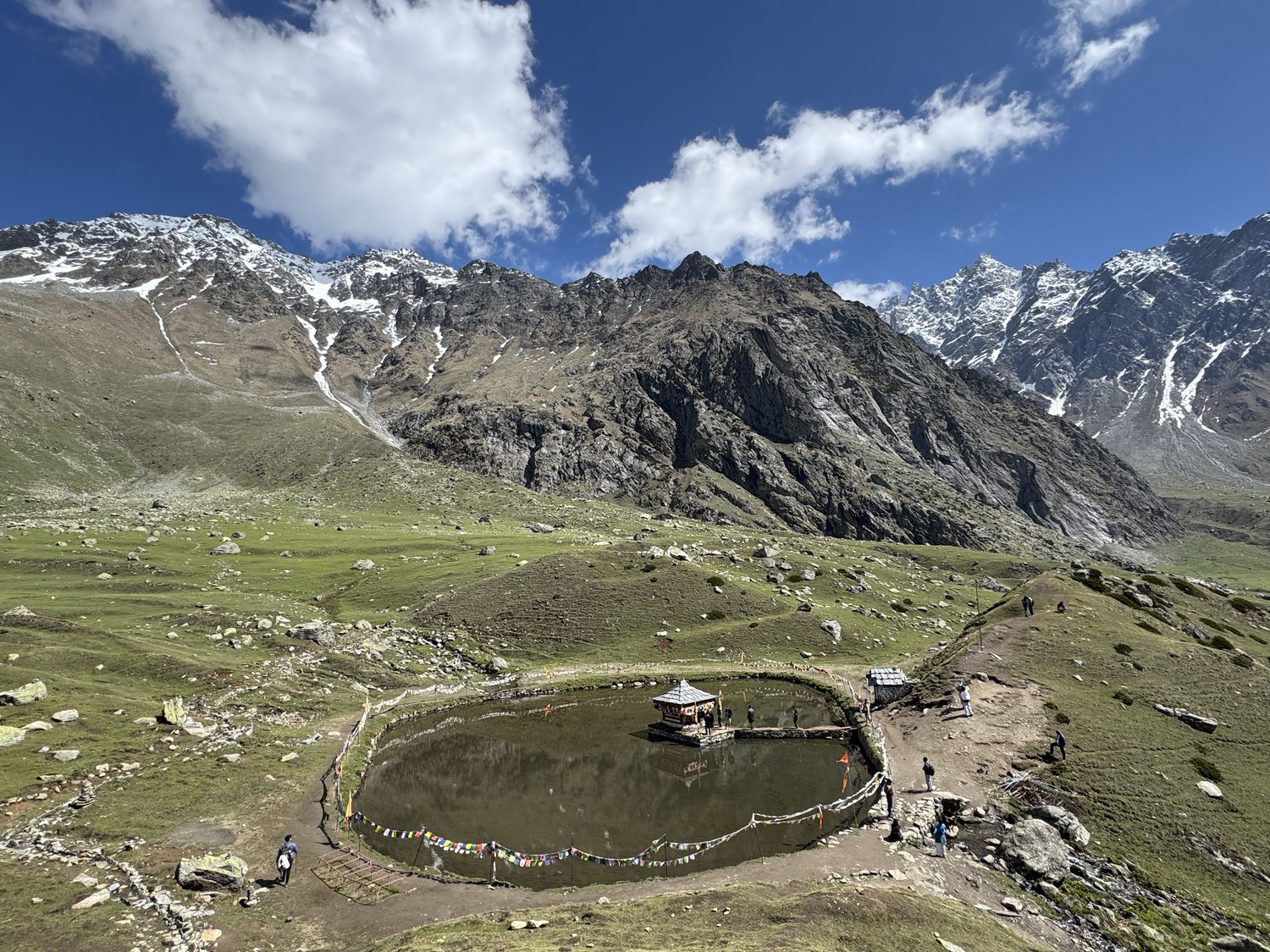
YOUR NEXT BODY OF WORK SEQUENCE: The story is 'Sacred Sites in Their Ecosystems — Not Postcards'. Frame 1: the wide establishing shot you made here — temple, valley, peaks, the full context. Frame 2: a single pilgrim at the water's edge at dawn, the mountains reflected, the human scale against the geological. Frame 3: the prayer flags in close detail, backlit, the peaks out of focus behind them — the human gesture of devotion as foreground, the mountains as presence, not subject.
The camera is just the tool. The real instrument is your attention.
A note on your Wildlife eye in a Landscape frame: Your Wildlife discipline gave you the patience to climb for the vantage point and the instinct to hold the full context — most Landscape photographers would have stopped at the temple level. The gap: Wildlife rewards the decisive behavioural moment, Landscape rewards waiting for the transient light moment, and you captured the geometry but not the light that makes it unforgettable.
Beautifully committed — you climbed past the obvious ground-level frame to show the temple in its full mountain context, and that decision separates this from the thousands of pilgrim snapshots made at eye level.
What is working
Where it stops short
The same five, every time, on the same scale every evaluation uses.
2.3 separates your strongest dimension from your weakest. That gap is where the next evaluation is won.
Where this reading sits against every photograph the engine has read.
This places you in the top 38% of Landscape images evaluated on Shutter League. Your how-striking-the-image-is score of 6.2 is slightly below the Landscape average of 6.8 — the elevated perspective is strong, but the midday light and centred composition follow the familiar visual language of Himalayan temple photography rather than transforming it, and that familiarity is what holds the disruption score in the mid-range.
“What a climb to make — and the frame earned it.”
Composition · Leading lines
Why this score. Climbing to an elevated vantage point at high altitude to capture the temple-mountain relationship shows genuine physical effort and location commitment — but the temple itself is accessible to pilgrims, and the aerial perspective, while requiring effort, does not place the photographer in extreme environmental hostility or restricted access that most cannot achieve.
Why this score. The elevated drone-like perspective without a drone is a strong compositional choice — but the wide-angle temple-in-landscape treatment with prayer flags and mountain backdrop follows the established visual language of Himalayan sacred site photography rather than transforming it.
Why this score. The frame captures a static scene with no transient element resolving at a geometric peak — the clouds are present but not positioned to isolate a specific mountain feature, and no moving subject or precise light moment creates the alignment that defines a landscape decisive moment.
Why this score. Access Wonder scores here — the photographer climbed to a vantage point that most pilgrims and casual visitors never reach, and the image places the viewer above a sacred site in a way that reveals its relationship to the surrounding peaks and valley, showing the temple as part of a larger mountain ecosystem rather than as an isolated destination.
Why this score. The image creates a feeling of scale and remoteness — the viewer feels the altitude, the isolation of the temple in its mountain bowl, and the thinness of human presence against geological permanence — a specific register of smallness and reverence that is closer to awe than beauty.
Standard edit · balanced
Darken the sky by one stop — the bright clouds are competing with the temple for attention, and reducing their luminance lets the temple become the clear anchor.
Increase contrast on the foreground temple and prayer flags — the midday light has flattened them into the valley, and adding local contrast separates them from the background and gives them presence.
Crop to 16:9 panoramic — remove the bottom fifth of the frame where the foreground adds no information, and let the horizontal sweep of the peaks dominate the composition.
Creative edit · artistic
Convert to black and white with a heavy red filter simulation — the blue sky goes near-black, the snow-covered peaks stay white, and the temple becomes a stark geometric anchor against geological drama. The prayer flags disappear. The frame becomes about permanence, not pilgrimage.
Now open
Nandi Hills is 1 hour from you. The mist season is active now through February — arrive at 05:45, position yourself at the eastern viewpoint before the crowd, and wait for the first sun to break through the cloud layer and isolate Tipu's Drop while the valley below stays in fog. The frame worth making: the cliff edge sharp in golden light, the valley a white void below.
Coming up
Savandurga is 45 minutes west. The granite monolith catches late afternoon side-light beautifully in winter — arrive at 16:00, climb to the saddle between the two peaks, and shoot the western face as the sun rakes across it. The frame: texture, shadow, and scale.
This evaluation is currently based on 3092 calibrated images.