 Shutter LeagueShutter League
Higher than 4% of images in the League
3.1 to go to recognition level (8.5) · best this year 9.14
osition one person at the edge looking outward. Shoot from low with your 95mm focal length so their silhouette breaks the horizon line and the city lights begin to glow behind them. The subject becomes part of the skyline instead of observing it.
YOUR NEXT BODY OF WORK SEQUENCE: The story is Bangalore from above — the city as vertical layers, not horizontal sprawl. Frame 1: A single figure silhouetted on a rooftop edge at dusk, the city lights spreading below them like a circuit board — the scale of the place. Frame 2: Inside a high-rise window at night, someone working late, their face lit by screen glow while the city glows outside — the human moment inside the vertical city. Frame 3: Dawn from Nandi Hills, the fog layer below and the city emerging through it like an island — the frame that stays with you because it shows what most people never see from this angle.
The photograph you almost made is always better than the one you settled for.
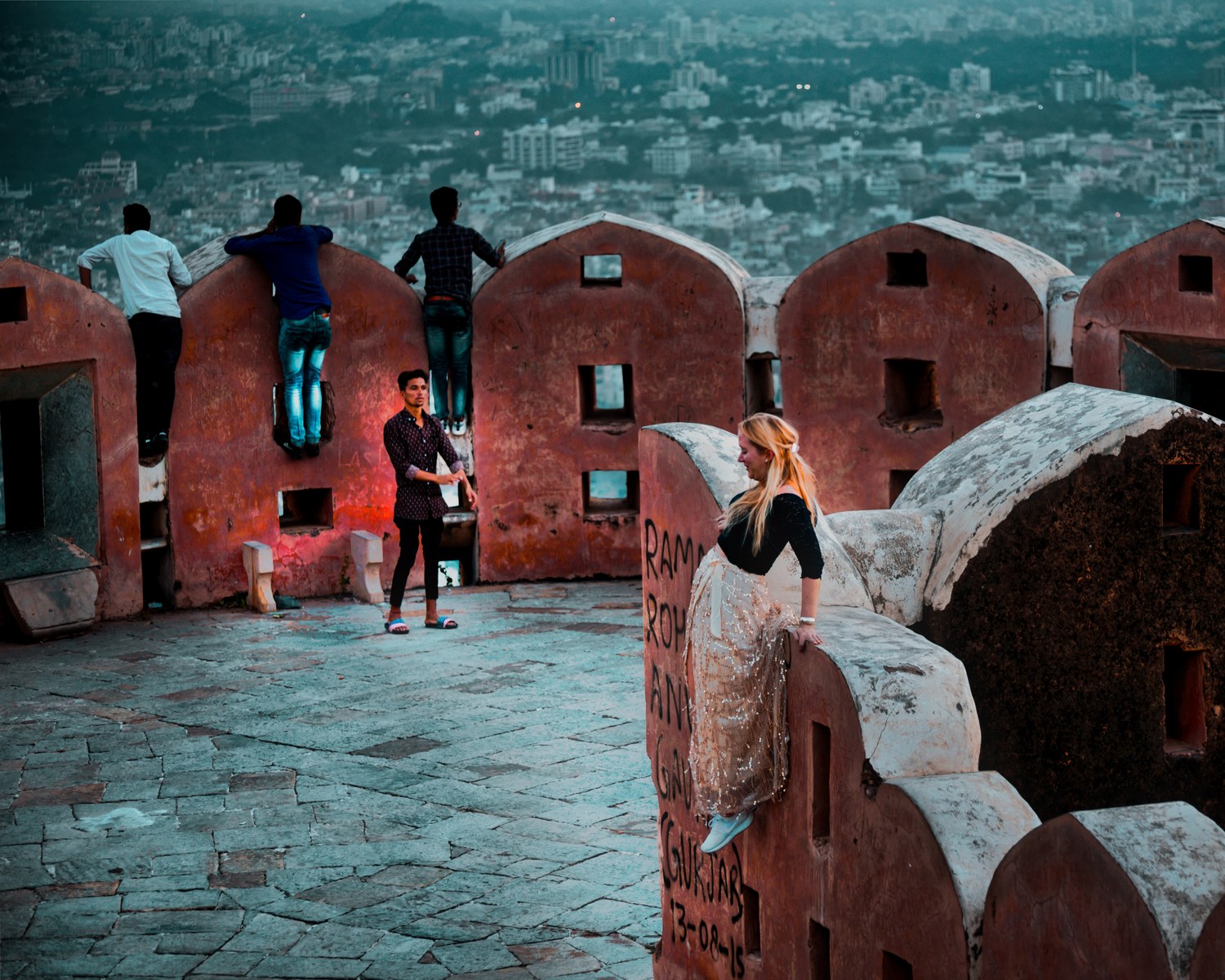
You waited for the right light — that soft dusk glow on the sandstone that transforms a tourist monument into something atmospheric — and you used the arches as repeating frames to build depth from foreground to cityscape. Most photographers at this location shoot midday or early evening and miss this exact quality of blue hour warmth.
What is working
Where it stops short
The same five, every time, on the same scale every evaluation uses.
2.3 separates your strongest dimension from your weakest. That gap is where the next evaluation is won.
Where this reading sits against every photograph the engine has read.
This places you in the top 48% of Street images evaluated on Shutter League. Your how well you captured the right moment score of 4.5 is below the Street average of 6.2 — this means you are present at interesting scenes with good light and composition instinct, but the frames are not yet capturing the peak instant where gesture, expression, and background all align simultaneously. The next step is learning to wait inside the scene for that one unrepeatable moment instead of documenting the ambient activity.
“Lovely instinct to use the arches as repeating frames and to anchor the composition with the foreground figure.”
Composition · Leading lines
Why this score. Being present at a famous tourist monument rooftop at dusk requires access but not physical difficulty — thousands of photographers stand in this exact spot every week, and the technical execution is standard wide-angle environmental portraiture with no challenging light or motion control.
Why this score. The wide environmental frame with multiple subjects scattered across architectural elements is a common treatment for rooftop tourist photography — the graffiti and casual poses add contemporary context but the overall visual language is familiar Instagram travel aesthetic.
Why this score. The moment captures ambient activity — people looking at the view, sitting, standing — but no single gesture, expression, or interaction reaches its peak simultaneously, and the scattered composition means the eye moves between subjects without finding a resolved decisive instant.
Why this score. Eye Wonder is present in the compositional find — the blonde woman in the foreground creates a visual anchor against the receding arches and cityscape — but the discovery is incomplete because the background subjects compete for attention rather than supporting the primary subject hierarchy.
Why this score. The image creates a feeling of casual presence at a beautiful place — the dusk light and architectural setting evoke a gentle wanderlust and the relaxed energy of travel — but the emotion is ambient rather than specific, closer to pleasant documentation than a named feeling that lingers.
Standard edit · balanced
Darken the three background figures on the rear arches by one to one-and-a-half stops — they are currently competing with the foreground woman for visual weight. Reducing their luminance subordinates them to supporting elements and lets the primary subject dominate.
Crop tighter from the left to remove the graffiti-marked arch edge in the foreground — the text and markings add visual noise that competes with the woman's face and the clean geometry of the stone. A cleaner foreground lets the eye settle on the subject faster.
Lift the shadows in the woman's face by half a stop — her features are slightly underexposed relative to the ambient dusk light, and bringing her face up in luminance strengthens the connection between viewer and subject.
Creative edit · artistic
develop a distinctive colour treatment with a strong blue channel filter to hold the sky luminance and let the sandstone arches go deep and sculptural — the image becomes about geometry and solitude instead of travel documentation, and the graffiti recedes into texture rather than reading as contemporary noise. The feeling shifts from pleasant wanderlust to something quieter and more timeless.
Now open
Devanahalli Fort is nearby — the old stone structure has similar arched battlements and rooftop access, but with far fewer tourists and cleaner walls. Early morning or late afternoon, the light rakes across the sandstone at a low angle and creates deep shadows in the arches. The frame worth making: one person silhouetted in a single arch opening, the countryside visible through the frame, shot from inside the colonnade so the arch becomes a natural vignette.
You have been shooting within your comfort zone recently. The Depth of Difficulty readings suggest familiar subjects in familiar light. The next level of your work probably requires deliberately harder conditions.
Across your last 30 photographs, over the past 43 days.
This evaluation is currently based on 3092 calibrated images.