 Shutter LeagueShutter League
Higher than 72% of images in the League
0.26 to go to recognition level (8.5) · best this year 9.16
becomes constellation.
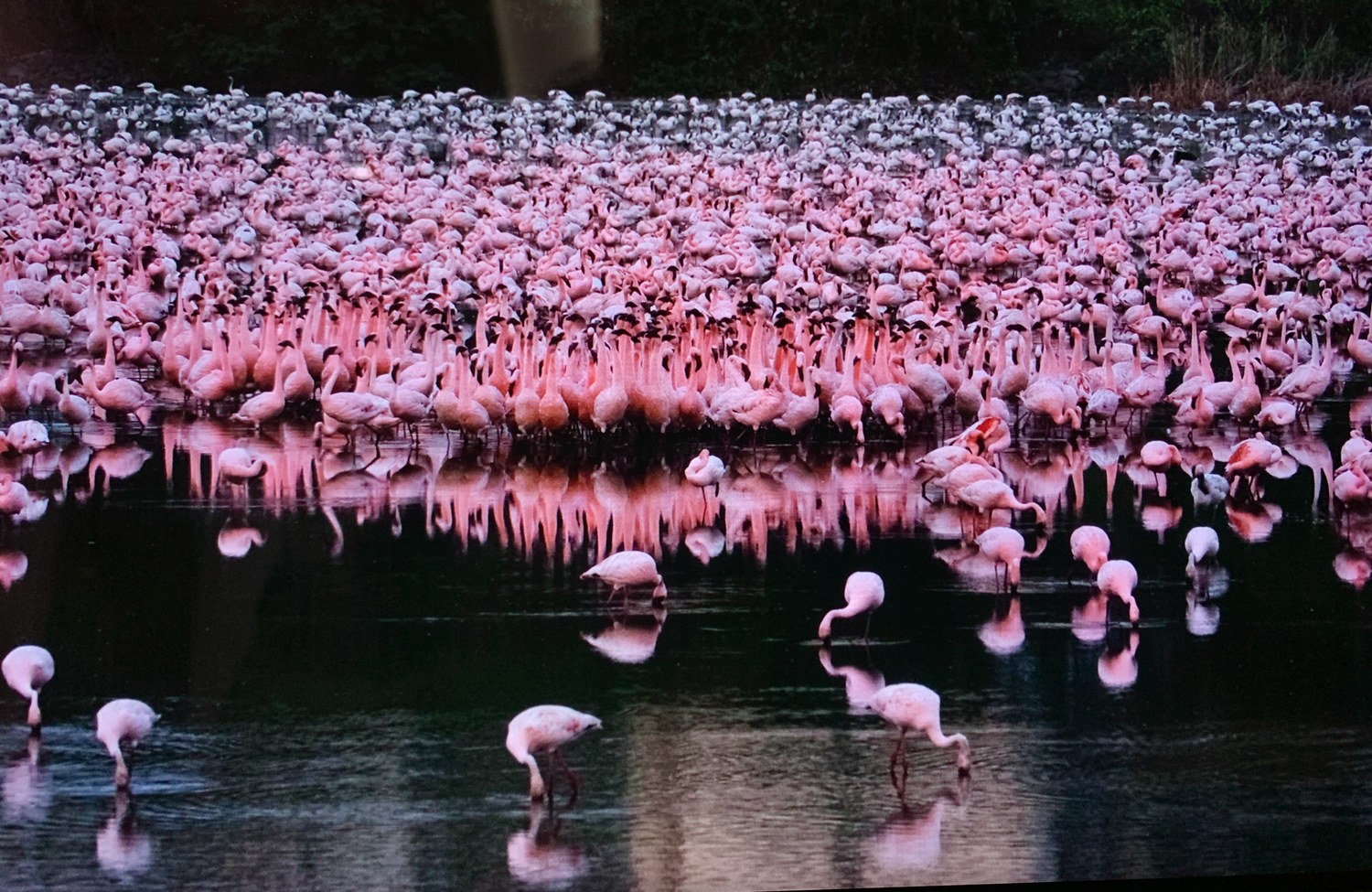
Exposure held the pink plumage gradient from foreground feeding birds through to the dense midground mass without clipping highlights or losing the dark water separation — the harder call when working with reflective water and massed pale subjects.
What is working
Where it stops short
The same five, every time, on the same scale every evaluation uses.
2.7 separates your strongest dimension from your weakest. That gap is where the next evaluation is won.
Where this reading sits against every photograph the engine has read.
“Abundance wonder at scale — thousands of Lesser Flamingos compressed into a single chromatic field with mirror-perfect reflections creates the feeling of witnessing something vast”
Composition · Symmetry
Standard edit · balanced
Burn the water in the foreground and background to deepen separation between the dark reflection plane and the pink subjects. Dodge selectively on the foreground feeding birds to lift detail in the neck curves and bill structure. Vignette the top third subtly to reduce the visual weight of the background trees and pull attention to the chromatic mass.
Creative edit · artistic
A monochrome conversion would destroy the image — the pink IS the story. Instead, push the colour temperature slightly cooler in the shadows and warmer in the highlights to increase the tonal range within the pink spectrum itself, making the gradient from coral to pale rose more pronounced. Alternatively, a high-contrast colour grade that deepens the water to near-black and saturates the pink toward magenta creates a more graphic, less naturalistic register — abundance as pattern rather than documentary.
Depth of Difficulty has been your quietest dimension lately. That often means you are in a productive groove — but grooves become ruts. One session deliberately outside your usual parameters would change this.
Across your last 30 photographs, over the past 4 months.
This evaluation is currently based on 3092 calibrated images.