 Shutter LeagueShutter League
Higher than 5% of images in the League
2.82 to go to recognition level (8.5) · best this year 8.18
sunrise. Position yourself so a single foreground element (a dock post, a moored boat, a tree at the water edge) sits in the left or right third of the frame, and wait for the first light to isolate the distant high ground while the foreground stays dark. That tonal separation is the emotional register this image is one step from. Shoot it on your phone. The camera does not matter. The light does.
Most photographers shoot and hope. The ones who improve ask before they shoot: what would make this perfect? Then they wait for that.
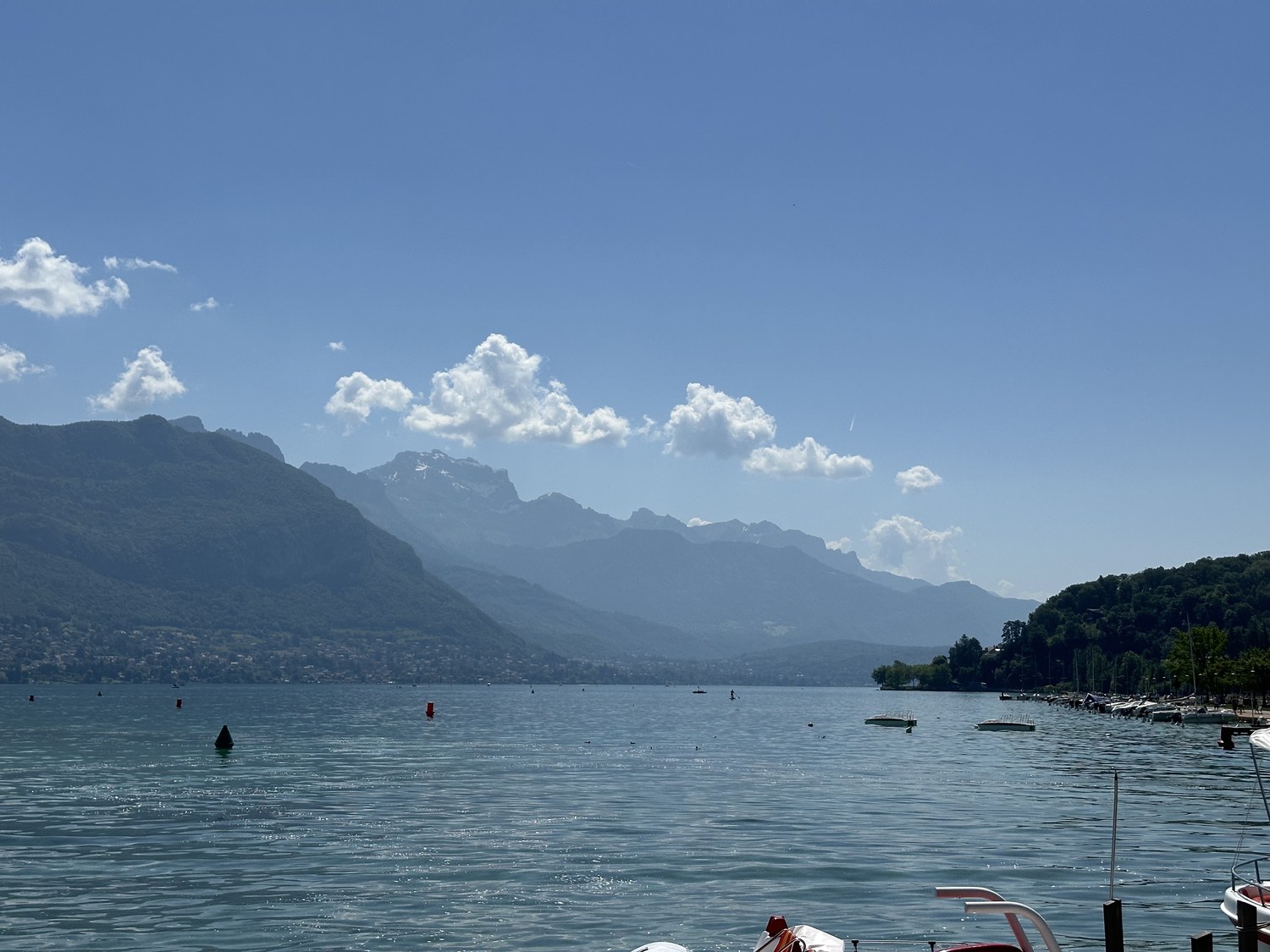
What you did that most photographers at Lake Annecy do not: you held the tonal separation across the receding ridges cleanly instead of letting the haze flatten into a single grey mass, and that atmospheric depth is what creates the melancholy this image delivers.
What is working
Where it stops short
The same five, every time, on the same scale every evaluation uses.
2.4 separates your strongest dimension from your weakest. That gap is where the next evaluation is won.
Where this reading sits against every photograph the engine has read.
This places you in the top 42% of Landscape images evaluated on Shutter League. Your how difficult it was score of 5.2 is below the Landscape average of 6.8 — accessible tourist locations score lower on difficulty regardless of how beautiful they are, and the gap to 7+ is about finding the moment or the angle that transforms the postcard into something singular.
“The atmospheric depth across those receding ridges is working — you held the tonal separation cleanly, and the turquoise water against the haze creates a specific melancholy that m”
Composition · Leading lines
Why this score. Lake Annecy is a heavily visited tourist destination accessible by car and public transport — the lakefront position required no physical difficulty, no extreme weather endurance, and no restricted access, and the midday light with static water demanded no timing precision or long-exposure technique.
Why this score. The wide alpine lake with receding mountain ridges is the standard postcard composition for this location — the atmospheric haze adds depth but the overall treatment follows the conventional tourist viewpoint without transformation.
Why this score. The static scene has no transient element resolving at a geometric peak — no moving subject, no storm light isolating a single ridge, no fog at a specific valley level — the moment is ambient midday clarity, not a decisive convergence.
Why this score. The atmospheric layering across multiple mountain ridges creates genuine depth and the turquoise water holds visual interest, but the location is doing most of the work — if this exact composition were shot at an ordinary local lake, the wonder would collapse to 5.5.
Why this score. Presence — the feeling of being somewhere calm and vast — is delivered cleanly, and the receding ridges under haze create a specific melancholy that lingers after looking away, which is why this scores above 7.0 despite the conventional framing.
Standard edit · balanced
Crop to exclude the boats and buoys at right edge — they add visual noise without adding meaning, and removing them simplifies the emotional register to water, mountains, and sky only.
Darken the sky by half a stop — the bright blue is competing with the turquoise water for attention, and reducing its luminance lets the water become the clear anchor.
Increase contrast slightly on the mountain ridges — the haze is working but the tonal separation between the nearest ridge and the farthest one could be stronger, which would deepen the sense of atmospheric recession.
Creative edit · artistic
Convert to black and white with a blue filter simulation to hold the sky dark and the water luminous — this removes the postcard colour palette entirely and forces the image to earn its mood on tonal depth alone, which is where the atmospheric layering is already doing its best work.
Now open
Right now, Luxembourg Gardens is hosting an outdoor landscape photography exhibition on the garden fences — Thibault Gerbaldi's work from Mongolia, Iceland, Ethiopia, and the Peruvian Andes. You are already there, zero travel. This is a rare chance to study how master landscape photographers compose extreme environments, and to photograph the juxtaposition of dramatic wilderness prints against formal garden landscapes. Golden hour light on the exhibited prints. Open through July 19 — one-off event, do not wait.
Coming up
The Marmottan Monet Museum is showing 'Landscape Stories: From Monet to Hockney' — 130+ years of landscape evolution from Impressionist painting to contemporary photography. Indoor exhibition, museum admission required, open through January 31. Study how the genre transformed across a century.
Across your last 17 photographs, over the past 88 days.
This evaluation is currently based on 3092 calibrated images.