 Shutter LeagueShutter League
Higher than 18% of images in the League
1.98 to go to recognition level (8.5) · best this year 8.18
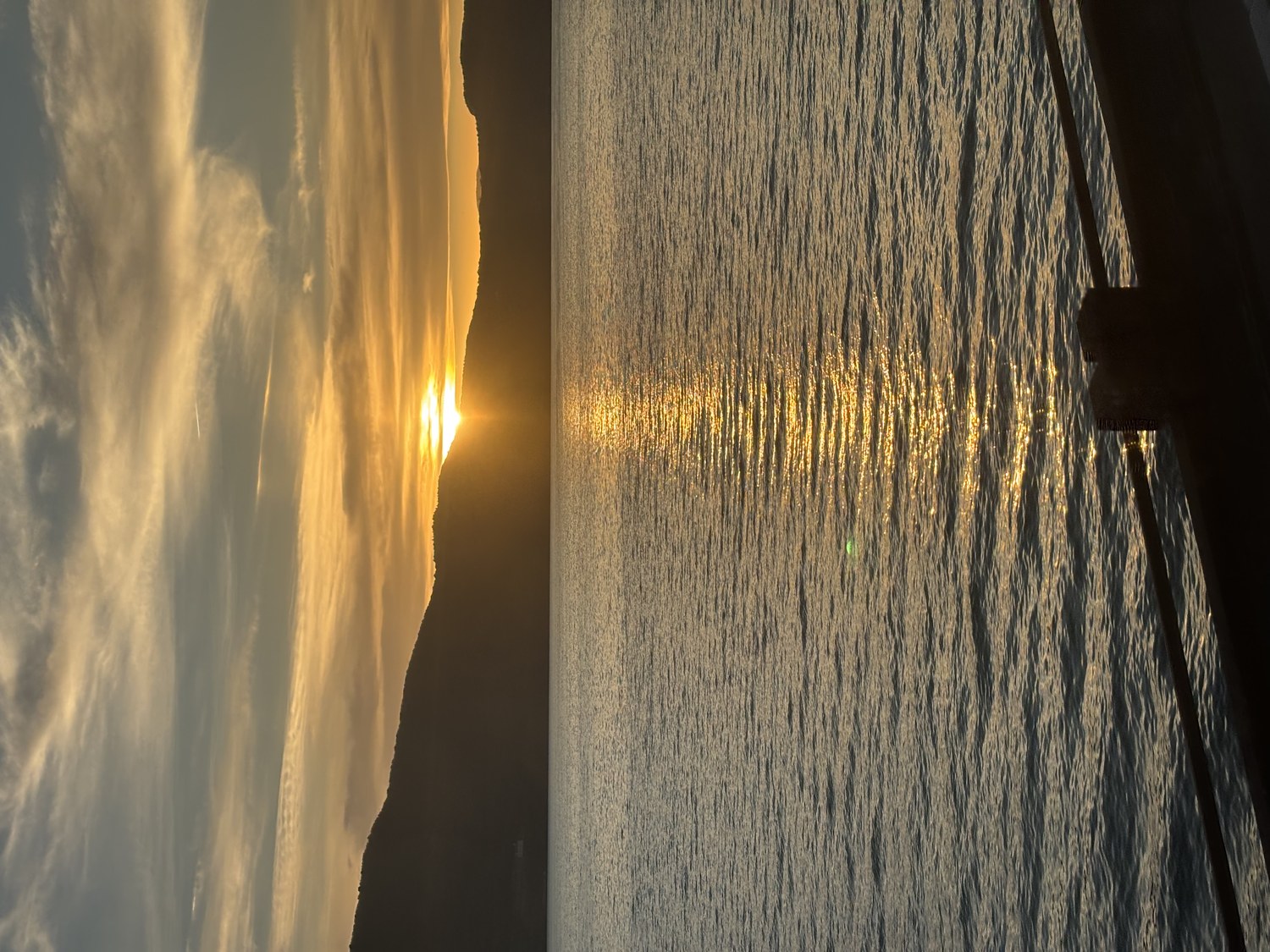
on path begins, and the composition locks into a complete geometric statement.
When the light falls into two registers like this — brilliant sun and dark surroundings — expose for the one that costs you more, not the one that feels safer. You proved this here: the golden reflection path holds without clipping, and the silhouetted structure anchors the frame edge even in shadow. This is what Ansel Adams called pre-visualisation — seeing the final print before the shutter fires and exposing for that vision, not for the averaged meter reading. The principle transfers to every high-contrast scene you encounter: backlit portraits, storm light isolating a single peak, dawn breaking over a ridge. Protect what gives the image its emotional truth, and accept the loss everywhere else.
What is working
Where it stops short
The same five, every time, on the same scale every evaluation uses.
4.2 separates your strongest dimension from your weakest. That gap is where the next evaluation is won.
Where this reading sits against every photograph the engine has read.
“You held the exposure for the light path and let the structure go dark — the harder call, and it gave the image its emotional weight.”
Composition · Leading lines
Standard edit · balanced
Rotate the image 90 degrees counterclockwise to correct the orientation — the horizon should run horizontally. Slight warming of the golden tones in the reflection path to emphasise the light quality. Minor sharpening on the sun and cloud layers only.
Creative edit · artistic
A monochrome conversion with the golden reflection path rendered as pure white against dark water would strip the image to its geometric essence — the leading line becomes absolute. Alternatively, a very dark colour grade — push the water and sky toward near-black and hold only the sun and its reflection path — creates an elemental register where light becomes the only subject.
Now open
Right now, Luxembourg Gardens is hosting an outdoor landscape photography exhibition on the garden fences — Thibault Gerbaldi's work from Mongolia, Iceland, Ethiopia, and the Peruvian Andes. This is a rare chance to study how master landscape photographers compose and present images of extreme environments, and to photograph the juxtaposition of dramatic wilderness prints against the formal gardens. The exhibition runs until mid-July, and the golden hour light on the exhibited prints creates rich compositional opportunities. This connects directly to your growth opportunity — studying how difficulty translates into visual impact when the location access and technical execution are both present.
Coming up
Starting late September, the Marmottan Monet Museum hosts a major exhibition tracing landscape representation from 1893 to 2026 — paintings and photographs spanning 130 years. For landscape photographers, this is unparalleled access to study how the genre has evolved and how artists and photographers have influenced each other across centuries. The exhibition runs through January 2027, giving you a long window to visit multiple times and absorb the compositional and emotional strategies that define landscape work at the highest level.
Across your last 17 photographs, over the past 88 days.
This evaluation is currently based on 3092 calibrated images.