 Shutter LeagueShutter League
Higher than 57% of images in the League
0.58 to go to recognition level (8.5) · best this year 9.21
il or feeding area. Let the animals come to you instead of tracking them. The frames you make when the subject does not know you are there score higher than the frames where you followed and they tolerated you.
The photographer who notices more makes better images. That is the whole secret.
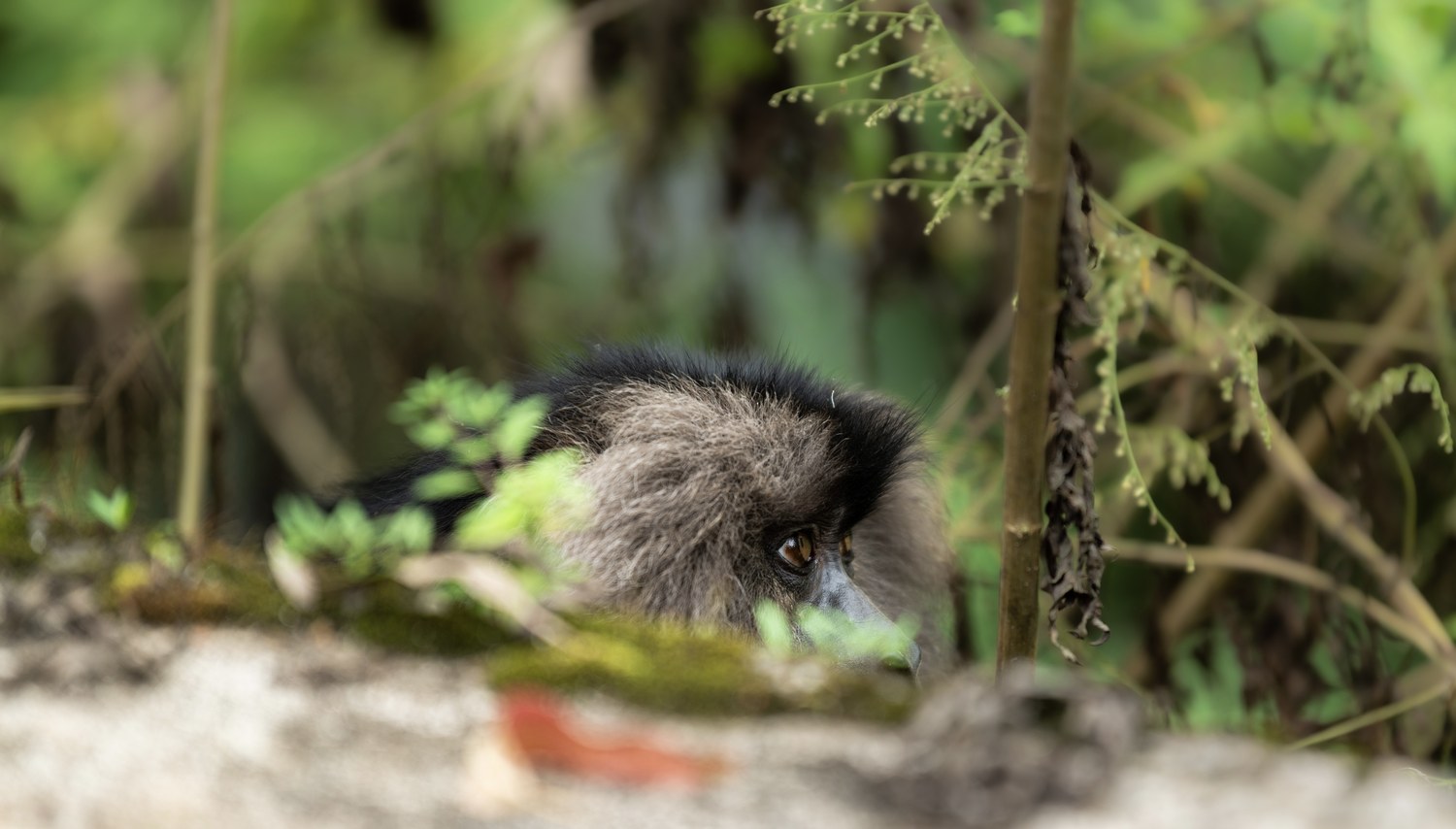
You got down to the animal's eye level and waited for the behaviour — most photographers shoot macaques from standing height looking up into trees, and those frames all look the same. You made a different decision, and it shows.
What is working
Where it stops short
The same five, every time, on the same scale every evaluation uses.
2.5 separates your strongest dimension from your weakest. That gap is where the next evaluation is won.
Where this reading sits against every photograph the engine has read.
This places you in the top 18% of Wildlife images evaluated on Shutter League. Your how striking the image is to a stranger score of 6.2 is slightly below the Wildlife average of 6.8 — the frame is technically strong and behaviourally interesting, but the centred composition and lack of directional space mean it does not disrupt expectations the way the highest-scoring wildlife frames do. Work on compositional asymmetry and negative space that adds narrative tension.
“Ten images in, and you are now making frames that show behaviour instead of portraits — this is the shift that separates published wildlife work from the archive.”
Composition · Negative space
Standard edit · balanced
Darken the upper-left corner where the bright green foliage is pulling the eye away from the subject — the macaque's face should be the only bright anchor in the frame, and right now the background is competing for attention.
Lift the shadows slightly on the macaque's face to bring out the texture in the silver ruff without losing the overall low-key mood — the detail is there, it just needs half a stop of targeted lift to separate from the black fur.
Crop tighter from the right edge to remove some of the empty green space and bring the subject closer to the right third line — this adds compositional tension without losing the ground-level context.
Creative edit · artistic
Convert to black and white and push the contrast hard — the silver ruff against the black face becomes a graphic study in texture and light, and the green distraction disappears entirely. This becomes a portrait of alertness instead of a forest scene.
Now open
Kabini Wildlife Reserve is about 4 hours from Bengaluru. The black leopard has been active this season — sightings are clustering at the waterhole before 7am. Dawn light through the forest canopy, unpredictable movement, restricted access — this is where your next Grandmaster-level frame comes from.
You have been shooting within your comfort zone recently. The Depth of Difficulty readings suggest familiar subjects in familiar light. The next level of your work probably requires deliberately harder conditions.
Across your last 30 photographs, over the past 67 days.
This evaluation is currently based on 3092 calibrated images.