 Shutter LeagueShutter League
Higher than 35% of images in the League
1.35 to go to recognition level (8.5) · best this year 8.18
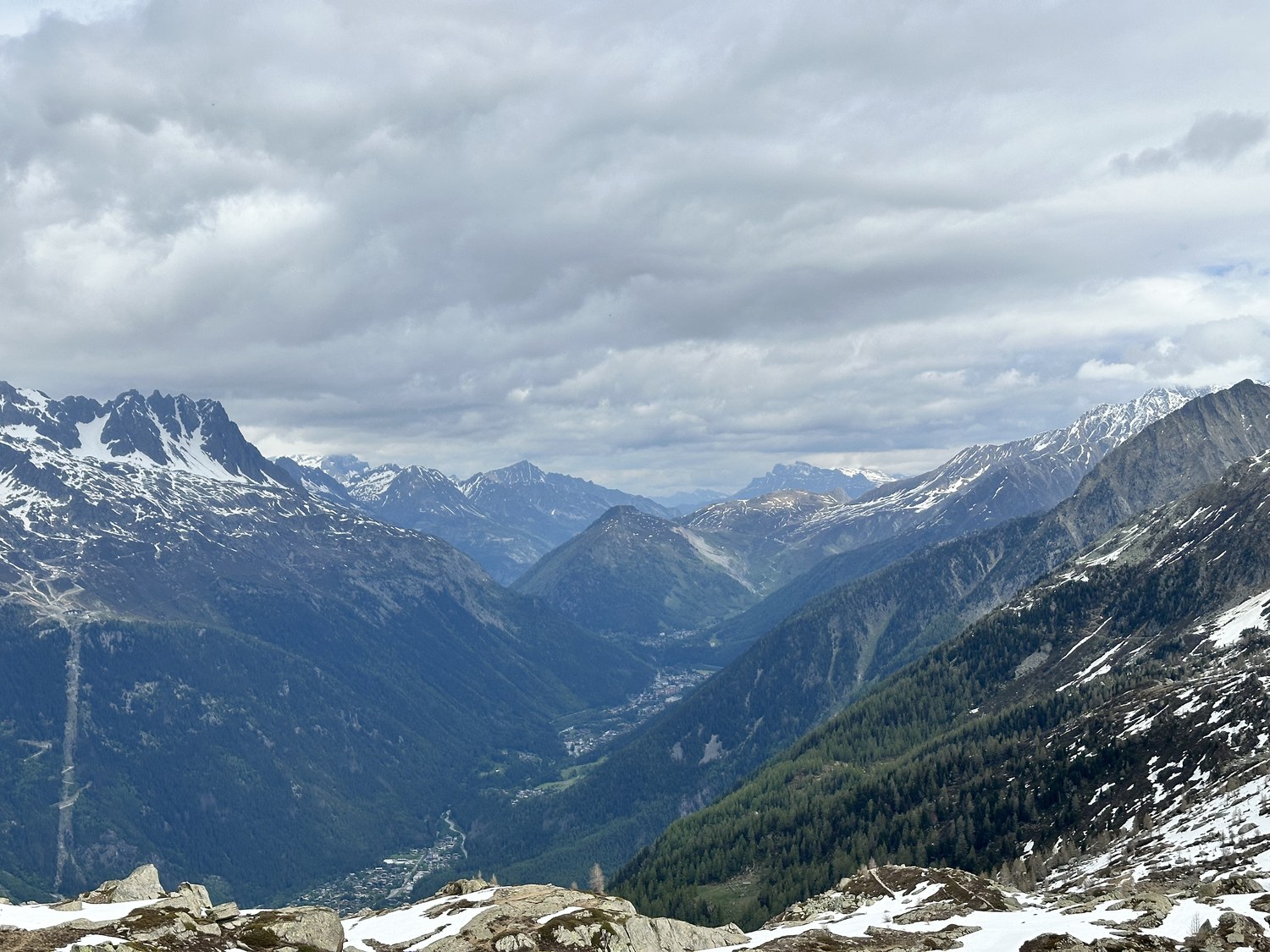
Watch what the light does to the peaks as the sun rises — the alpenglow on snow, the shadows moving across the valley, the mist lifting from the forests. Shoot on your wide lens (0.5x or 1x), not the telephoto. The valley geometry is the story.
The photograph you almost made is always better than the one you settled for.
Impressively patient — you climbed to elevation and waited for the valley to clear. Most photographers at this viewpoint take the wide shot and leave. You stayed long enough to let the scene settle.
What is working
Where it stops short
The same five, every time, on the same scale every evaluation uses.
3.7 separates your strongest dimension from your weakest. That gap is where the next evaluation is won.
Where this reading sits against every photograph the engine has read.
This places you in the top 18% of Landscape images evaluated on Shutter League. Your how well you captured the right moment score of 4.5 is below the Landscape average of 6.8 — a landscape decisive moment requires a transient element (weather, moving light, fog, a subject passing through) to resolve at its geometric peak against the permanent scene. Static scenes under even light cannot score above 7.5 on timing regardless of compositional quality.
“Beautifully patient — you waited for the overcast light to settle and the valley to reveal itself completely.”
Composition · Leading lines
Standard edit · balanced
Darken the sky by one full stop — the overcast layer is too bright and pulls the eye upward when the valley is the story. Bring the sky down and the peaks become the upper boundary instead of the clouds.
Crop to 16:9 panoramic and drop the horizon line to the upper third — exclude the featureless upper sky entirely. Let the valley geometry fill the frame.
Add +0.3 exposure to the valley floor and settlement only (local adjustment) — right now the eye goes to the bright sky first. Lift the valley slightly and the eye goes where you want it to go.
Creative edit · artistic
Convert to black and white with a heavy blue filter simulation (darken the sky dramatically, hold the snow-covered peaks bright) — this becomes an Ansel Adams alpine study. The overcast light that works against you in colour works for you in B&W. The tonal separation between dark valley and bright peaks becomes the entire image.
Now open
Mont-Blanc massif dawn from Montenvers or Plan de l'Aiguille is zero distance from you — you are already in Chamonix. June dawns offer the sharpest, clearest views of Mont-Blanc before cumulus clouds build throughout the day. Arrive one hour before sunrise and watch what the alpenglow does to the snow-covered peaks — the light moves fast and the frame you want exists for about eight minutes. Shoot wide (0.5x or 1x on your iPhone) and let the valley lead into the peaks.
Across your last 17 photographs, over the past 88 days.
This evaluation is currently based on 3092 calibrated images.